
Flipping Rebuilt Title Cars: Is the Discount Worth the Risk?
Thinking about flipping rebuilt title cars? Learn how salvage and rebuilt titles differ, how much they cost at resale, and a checklist to decide if one is worth it.
Every flipper has seen the listing. A three-year-old SUV priced thousands under every comparable car, with “rebuilt title” buried in the description. The margin looks huge.
Sometimes it is. More often, the discount is the market telling you what the car is really worth. This guide explains how title brands work, what they do to your resale price, and how to decide whether a rebuilt-title flip pencils out.
Salvage vs. Rebuilt: What the Brands Mean
The terms are easy to mix up, and mixing them up costs money.
- Salvage title: An insurer or state has declared the car a total loss, usually because repair costs passed a set share of its value. Thresholds vary by state. A salvage car generally can’t be registered or driven on the road until it’s repaired and inspected.
- Rebuilt title (sometimes “reconstructed” or “rebuilt salvage”): The car was repaired and passed a state inspection, so it can be registered again. The brand stays on the title permanently.
- Clean title: No total-loss brand. This is what most buyers want.
Names and rules differ by state, so check your state DMV’s definitions before you bid on anything. If you’re also unsure how many cars you can sell each year without a license, see car flipping laws by state.
What a Rebuilt Title Does to Resale Value
The brand follows the car forever, and buyers price it in. According to CarInsurance.com, Kelley Blue Book’s rule of thumb is to deduct 20% to 40% from a clean-title value. Other sources cite a wider range, and the real figure depends on the make, the severity of the original damage, and the quality of the repair.
That discount isn’t free profit. It’s already baked into the asking price. If a seller lists a rebuilt car 30% under clean comps, you haven’t found a deal. You’ve found a fairly priced rebuilt car.
Run the numbers the same way you would for any flip, using the formula in how to calculate car flipping profit. The difference is that your sale price assumption has to come from rebuilt comps, not clean ones.
An illustrative example
Say clean-title versions of a car sell for about $15,000. These numbers are made up to show the logic:
| Line item | Amount |
|---|---|
| Realistic rebuilt sale price (about 30% off clean comps) | $10,500 |
| Purchase price | −$8,500 |
| Recon, fresh inspection, and detailing | −$600 |
| Title and registration fees | −$250 |
| Extra holding time (insurance, ads, storage) | −$300 |
| Profit | $850 |
That’s a thin margin on a car that might sit for weeks, with more risk than a clean-title flip at the same price. The same purchase price on a clean car could leave you well ahead.
The Real Costs: Insurance, Financing, and a Smaller Buyer Pool
The discount is only part of the story. Rebuilt cars are harder to sell, and the reasons are practical.
Per Experian’s overview of rebuilt titles, buyers often hit friction with lenders and insurers. Many lenders hesitate to finance rebuilt cars, and some insurers limit coverage or charge more. Since many used-car buyers depend on a loan and full coverage, that friction shrinks your pool to cash buyers and the more adventurous.
Expect these consequences:
- Longer days-to-sell. Fewer qualified buyers means more waiting, and every extra week costs you.
- Lowball offers. Even after you price correctly, buyers will push for more off.
- Dealer and trade-in resistance. If your exit plan involves selling to a dealer, call around first. Many won’t take branded titles.
- Disclosure obligations. Most states require you to disclose a branded title in writing. Hiding it is fraud, and it’s the fastest way to turn a small profit into a lawsuit.
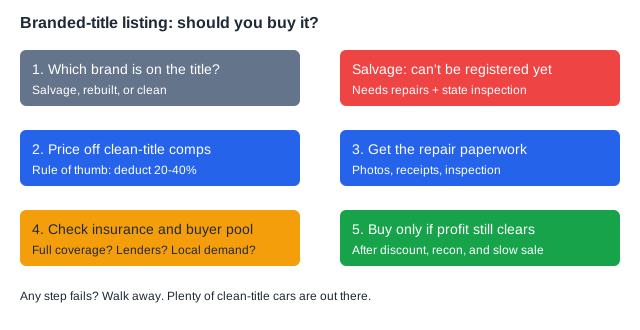
How to Vet a Rebuilt-Title Car Before You Buy
If you still want to consider one, treat the paperwork and the repair quality as the product you’re buying.
1. Run a history report
Pull a vehicle history report and read what happened. Look at the damage type (a cosmetic hit is different from flood, fire, or structural damage), the date of the title brand, and any odometer or ownership gaps. Our guide on how to tell if a used car is a good deal covers history checks in more detail.
2. Ask for repair documentation
A seller who did the work properly will have it: before photos, parts receipts, shop invoices, and the state inspection record. No documentation, no deal.
3. Get an independent inspection
Pay a mechanic or body shop you trust to look at frame alignment, panel gaps, paint thickness, airbag system status, and fluid or electrical issues. A few hundred dollars here is cheap compared with a car you can’t resell.
4. Call an insurer
Before you commit, ask an insurer what coverage they’ll write for that VIN and at what price. If a buyer can’t get decent coverage, they won’t buy.
5. Price from rebuilt comps and set a walk-away number
Search for similar rebuilt-title cars that actually sold, not just listed. Then work backward from a realistic sale price to a maximum purchase price. If the seller won’t meet it, move on.
Who Should Flip Rebuilt Titles (and Who Shouldn’t)
Rebuilt-title flipping can work for people with real advantages:
- You do your own body and mechanical work and can fix problems cheaply.
- You have a buyer network of cash buyers or export buyers.
- You know your local market well enough to price branded cars accurately.
If you’re new, don’t start here. Beginners usually do better flipping clean-title cars in the $3,000 to $10,000 range, where the exit is faster and the downside is smaller. Our beginner’s guide to flipping cars for profit lays out that path, and car flipping as a side hustle shows what a realistic first year looks like.
Finding Underpriced Cars Without the Branded-Title Baggage
Most flippers get better margins by finding clean cars that are truly underpriced than by gambling on a brand. That means seeing new listings early and comparing them against similar cars.
Flipify Motors helps with both. Save your criteria as watchlists and review new matches in one feed. Then use listing insights to see how an asking price compares with similar vehicles. You can read more about the workflow on the how it works page.
Frequently Asked Questions
Is a rebuilt title the same as a salvage title?
No. A salvage title means the car was declared a total loss and isn’t yet road-legal. A rebuilt title means it was repaired and passed inspection, so it can be registered. The total-loss history stays on the record.
Can you make money flipping rebuilt title cars?
Yes, but margins are tighter and risk is higher than with clean-title cars. You need accurate rebuilt comps, a documented repair history, and a plan for the smaller buyer pool.
Do you have to disclose a rebuilt title when selling?
In most states, yes. Rules vary, so check your state’s requirements and put the disclosure in writing on the bill of sale.
Is it legal to flip salvage cars?
Generally you can buy and sell them, but you usually can’t register or drive one until it’s repaired and inspected. Dealer-license limits and title rules still apply. Check with your state DMV.
Figures in the example are illustrative. Title rules, total-loss thresholds, and licensing differ by state, so confirm local requirements before you buy or sell.

