
How to Write a Used Car Listing That Sells Fast (Photos, Title, and Price)
Learn how to write a used car listing that sells fast: the right photos, title, description, and price so your flip doesn't sit on the lot.

You bought well, did the recon, and ran the numbers. Now the car sits in your driveway, costing you insurance, storage, and attention every day it’s unsold.
The listing is the last lever you control. A weak one gets scrolled past; a strong one fills your inbox with serious buyers. Here’s how to write a used car listing that sells fast, from the first photo to the final price.
Why your listing is your sales pitch
Buyers see dozens of similar cars in a single scroll. According to Cox Automotive, used-vehicle supply stood at 49 days at the start of 2026, with roughly 2.2 million cars listed nationwide. That is a lot of competition for the same buyer.
Every extra day also eats margin. If you haven’t already, run your holding costs through our car flipping profit formula so you know what a slow sale really costs.
A good listing does three jobs:
- Stops the scroll with a clear cover photo and a specific title
- Answers questions up front so buyers don’t have to ask
- Builds trust so the people who message you are ready to buy
Step 1: Shoot photos that earn the click
Photos do the heavy lifting. Most buyers decide in seconds whether a car is worth a message.
More isn’t always better. A CarStory study reported by Digital Dealer found that listings with nine photos generated 56% more leads than listings with 20, a pattern the study called “image fatigue.” It’s a dealer-listing study, so treat it as a guide rather than a law, but it supports a simple rule: curate, don’t dump.
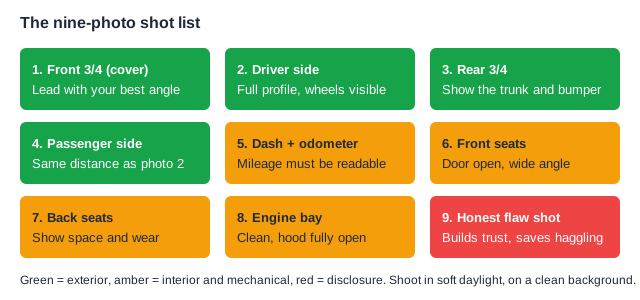
Photo basics
- Wash and vacuum first. A detail is the cheapest upgrade you can buy. See our reconditioning guide for what’s worth spending on.
- Shoot in soft daylight. Early morning or an overcast afternoon avoids harsh glare and shadows.
- Pick a clean background. An empty lot or quiet street beats a cluttered garage.
- Shoot landscape, at chest height. Hold the phone level and keep the whole car in frame.
- Include one honest flaw shot. A close-up of the door ding you mentioned in the description makes every other photo more believable.
Skip filters, heavy editing, and dealer-style watermarks. Buyers on peer-to-peer platforms want to see the actual car.
Step 2: Write a title that matches how people search
Buyers search by year, make, and model, so lead with those. Add the one or two details that actually move a decision.
| Weak title | Strong title |
|---|---|
| Nice car runs great!! | 2017 Honda Civic EX, 64k Miles, Clean Title |
| Must sell | 2015 Toyota Camry LE, One Owner, New Tires |
| Great deal | 2019 Ford Escape SE, 48k Miles, Service Records |
Rules of thumb:
- Put year, make, model, trim first
- Add mileage and title status (clean, rebuilt, and so on)
- Mention one standout feature, such as new tires or one owner
- Avoid ALL CAPS, emojis, and “OBO” in the title
Step 3: Write a description that answers questions
A good description is short, specific, and honest. Think of it as the answers to the first ten messages you’d get anyway.
Use this template:
- One-line summary: “One-owner 2017 Civic EX with full service records. Runs and drives great.”
- Key facts: mileage, transmission, engine, drivetrain, title status
- Recent work: tires, brakes, battery, fluids, with dates if you have receipts
- Known issues: every flaw you know about
- Logistics: location, availability, and how you want to handle test drives and payment
Disclosing problems feels risky, but it filters out time-wasters and protects you legally. Rules differ by state, so check our overview of car flipping laws by state before you list.
Words that help, words that hurt
- Helps: “service records,” “clean title in hand,” “cold A/C,” “new brakes (Sept 2026)”
- Hurts: “needs minor work” (without saying what), “as is, no questions,” “serious buyers only”
If the car has a branded title, say so in the first line. Our post on flipping rebuilt title cars explains how that changes your buyer pool.
Step 4: Price it so it sells, not so it sits
Price is the biggest driver of how fast a car moves. Price too high and you’ll collect views but no messages. Price too low and you leave money on the table.
Set your price with real comparables, not hope:
- Pull 5 to 10 comparable listings within about 100 miles with similar mileage and condition.
- Ignore the highest and lowest outliers. Anchor on the middle of the pack.
- Adjust for your car’s condition, records, and recon work.
- Add a small negotiation cushion, typically 3 to 5%, so you can “give” a little and still hit your target.
- Pick a walk-away number before the first message arrives.
Our guide to telling if a used car is a good deal walks through the same comp process from the buyer’s side. Use it in reverse to price your own listing.
The two-week rule
Set a checkpoint. If you’ve had plenty of views but few messages after about a week, the price or photos are the problem. If you get lots of messages but no one shows up, tighten the description. Adjust one variable at a time so you know what worked.
Step 5: Respond fast and make it easy to buy
Speed matters on your side of the transaction too. The buyers who message first are often the ones ready to act, and they message several sellers at once.
- Reply within minutes when you can. Use saved replies for common questions.
- Offer specific times for viewings instead of “whenever.”
- Meet in a safe, public place and let the buyer’s mechanic inspect the car.
- Have paperwork ready: title, bill of sale, and any service records.
A pre-publish checklist
Before you hit post, confirm:
- Cover photo is the front three-quarter angle and looks sharp
- 8 to 12 photos, including odometer and one flaw
- Title has year, make, model, trim, mileage, and title status
- Description lists recent work and known issues
- Price is based on current comps with a small cushion
- You know your walk-away number
Frequently asked questions
How many photos should a used car listing have?
Aim for roughly 8 to 12 well-chosen shots. The CarStory data above suggests quality and curation beat sheer volume, as long as you cover every angle, the interior, the odometer, and any flaws.
Should I list my price as firm or negotiable?
Say nothing in the title, and state your position in the description. “Priced to sell, small room to negotiate” sets expectations without inviting lowball offers.
Where should I list a car I’m flipping?
Facebook Marketplace, Craigslist, and OfferUp reach local buyers, while sites like Autotrader and Cars.com charge fees but reach shoppers who browse nationally. Many flippers start with free local platforms and move up if the car stalls.
Is it okay to reuse the seller’s photos?
No. Take your own. It’s more honest, and your buyers will notice if the pictures don’t match the car in person.
Sell faster by buying smarter
The easiest car to sell is one you bought below market in the first place. If you’re still hunting for that next flip, Flipify Motors watchlists alert you when new listings match your criteria, and our how it works page shows the full workflow from search to sale. Once you’ve bought, the inventory tracker keeps your costs and profit in one place.